Choose a pneumatic rock loader by working back from the mine car. Can the bucket clear the car rim and discharge inside the opening? Is there room above it for the full lift? Can the air line supply the loader while other equipment is running? Once those conditions are met, compare bucket sizes against the volume of loose rock to be cleared and the time that empty cars are available.
Take one cross-section at the most restricted point and one at the loading position. Mark the railhead, the underside of the lowest support and any pipes or ventilation duct that project into the opening. For a rail-mounted loader, measure the track gauge and show where the rails end relative to the pile. A machine that fits between the walls can still leave rock outside the bucket’s reach.
Site record | What the supplier needs to check |
Clear width and height after support | Space for the machine, bucket movement and operator |
Mine-car drawing and rail gauge | Car opening, rim height above rail and discharge position |
Typical and largest rock fragments | Bucket entry, filling and the frequency of oversize pieces |
Loose volume and time per round | Required loading rate and empty-car supply |
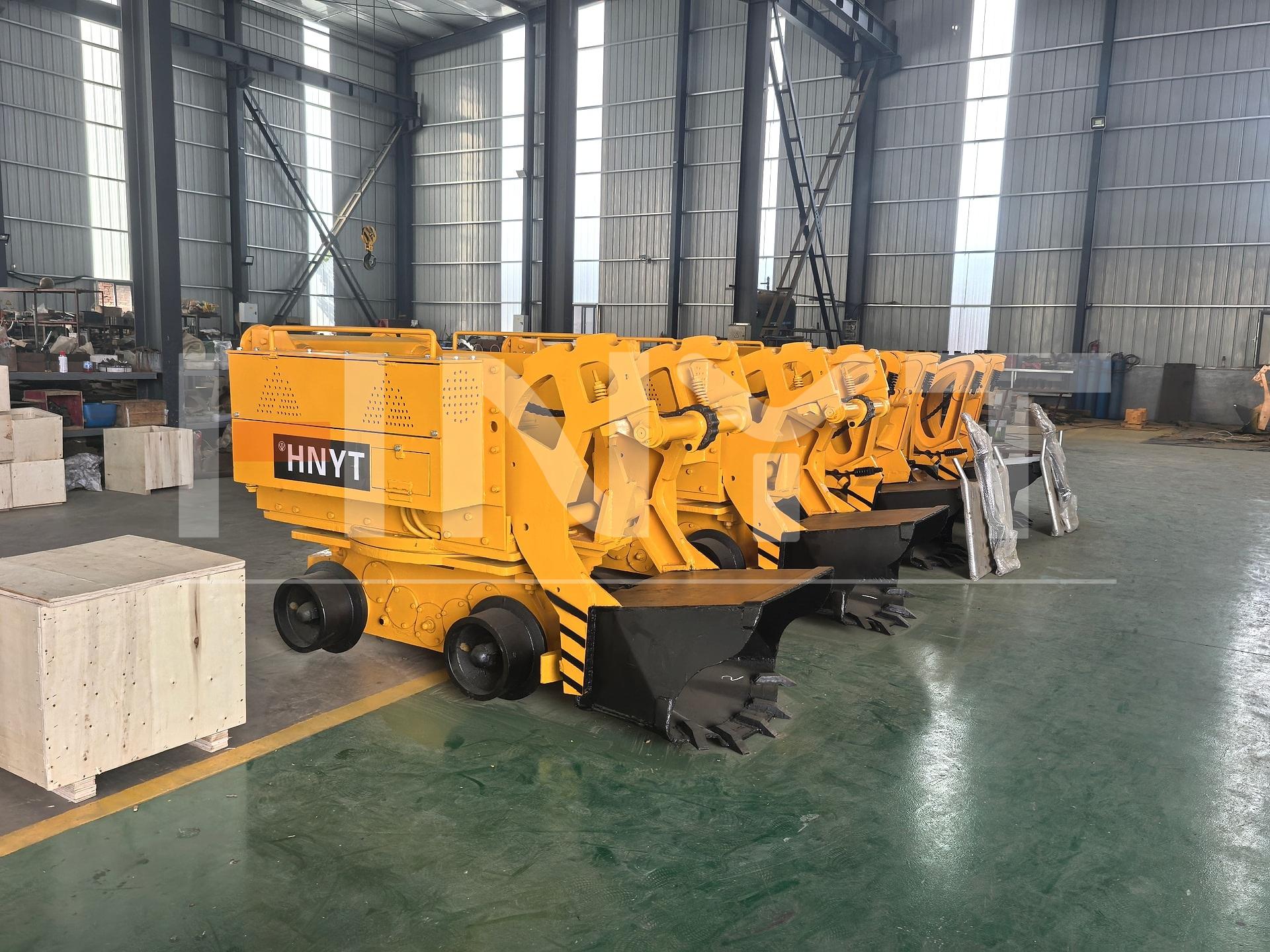
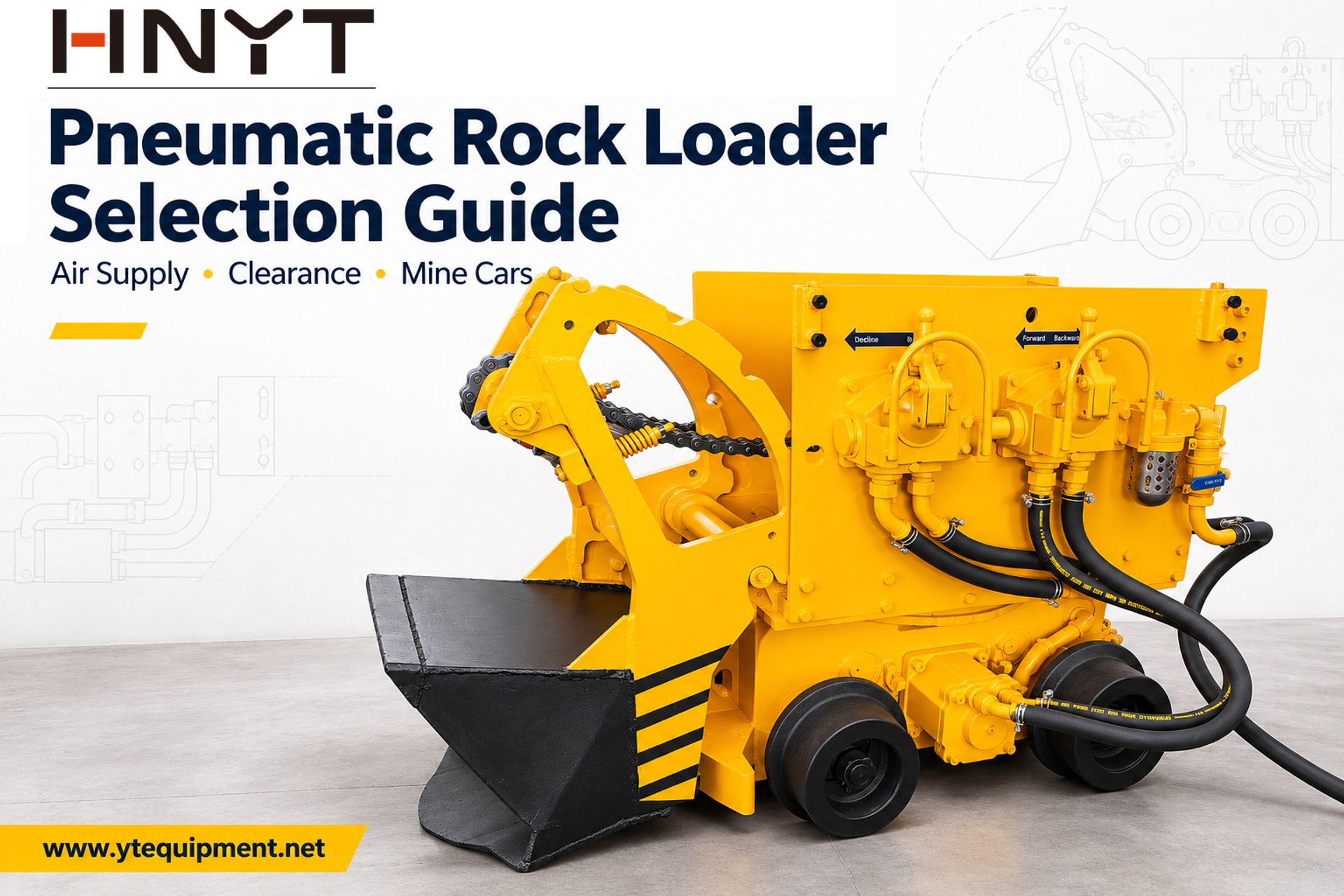
A rocker shovel picks up loose rock at the front and lifts the bucket over the machine to discharge into a car behind it. Request a side elevation showing the entire bucket path. Put the loader and car drawings on the same scale and align both to the top of the rail. A car rim measured from the floor can introduce a substantial error into this comparison.
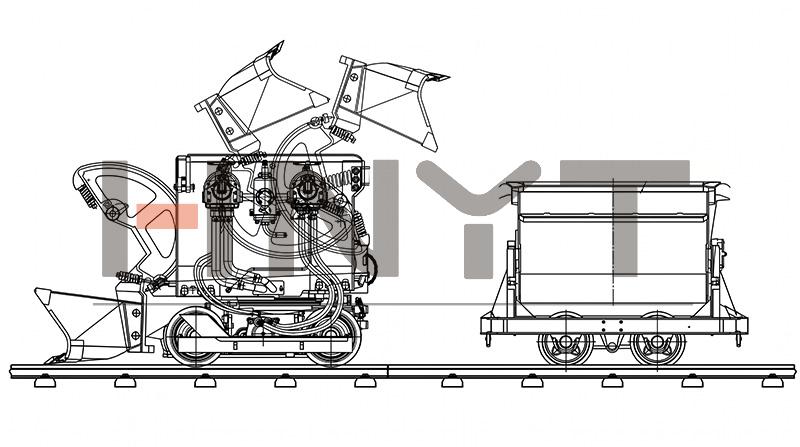
Check the lowest obstruction over the arc, then check where the rock will fall relative to the car opening. A bucket may pass above the rim but discharge against the near wall of the car. Include the coupling arrangement and actual spacing between vehicles in the drawing. HNYT’s site videos of the ZQ-13 and ZQ-26 show the loading sequence.
Ask for the working pressure at the loader inlet and the air consumption for the proposed duty. Record both the pressure and the conditions when it was measured. A reading taken with the loader idle can look adequate even when the pressure falls during bucket lift.
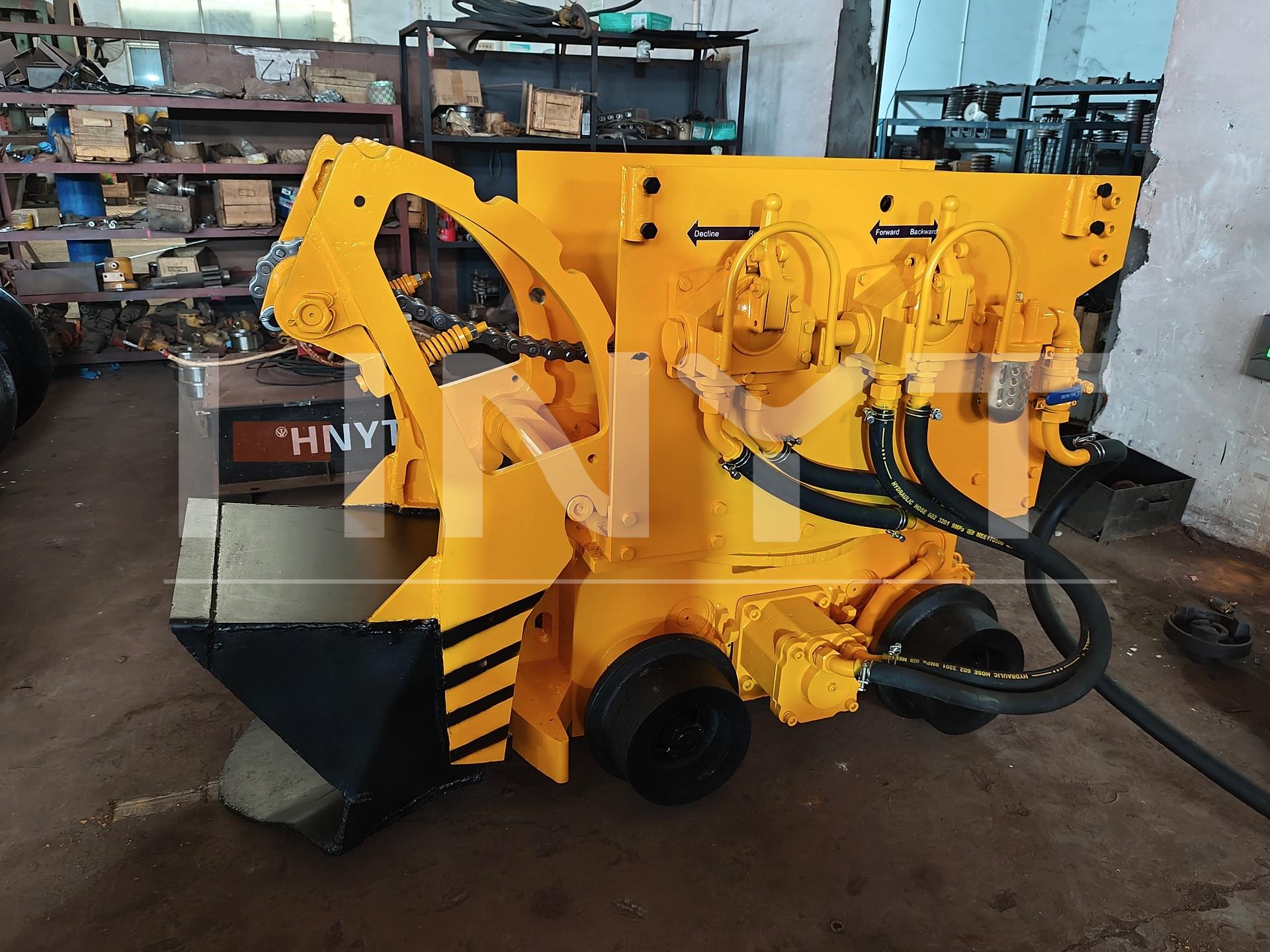
Give the supplier the hose length, internal diameter, coupling details and a list of other machines drawing air from the branch. Compare flow figures on the same reference basis, especially where one sheet quotes free air and another gives volume at line pressure. If the shift includes drilling and loading on separate headings, check whether those activities overlap.
Both models are candidates for a heading served by mine rails. The ZQ-17 has a smaller bucket and a lower published loading height. The ZQ-26 can collect a larger volume per full scoop and has a wider published loading width. Its discharge height, however, is slightly lower. Moving up in bucket size therefore calls for a fresh check of the receiving car.
Published reference | ZQ-17 | ZQ-26 |
Bucket volume | 0.17 m³ | 0.26 m³ |
Loading width | 1,910 mm | 2,700 mm |
Loading height | 1,975 mm | 2,240 mm |
Discharge height | 1,260 mm | 1,250 mm |
Use the HNYT model comparison to shortlist a machine. Ask for the dimensioned drawing of the quoted configuration before agreeing clearances. Loading width describes the area the bucket can work across. The mine must also allow for the machine body, operator and services.
Suppose a round produces 48 m³ of loose rock. The schedule allows four hours to clear it, including one hour spent exchanging cars and waiting for haulage. That leaves three hours of actual loading. The target during those hours is 48 ÷ 3 = 16 m³/h. If waiting rises to two hours, the required loading rate rises to 24 m³/h. The average over the four-hour window stays at 12 m³/h.
These figures describe the example shift. To compare offers, ask what each stated rate includes. A short demonstration with a car already in position measures a different part of the cycle from a full round with car changes. Record the loose volume moved, actual bucket time and waiting time separately during a trial. If cars are regularly unavailable, shortening their turnaround may achieve more than a larger bucket.
Our production target is in tonnes. How do we use it here?
Divide the mass by the measured bulk density of the loose material to obtain a loose volume. Use tonnes and tonnes per cubic metre for a result in cubic metres. A density taken from solid rock can understate the volume that the loader and cars must handle after excavation.
Can we keep our existing mine cars?
Send the car drawing and a side photograph with a reliable scale. Two cars with the same nominal volume can have different rims and openings. Check the rail gauge, relative position and discharge path together. Also confirm the allowable payload for the material being loaded.
What if the heading has no rails?
Consider a wheel-mounted pneumatic loader alongside the proposed haulage method. Identify what will receive the rock and how that vehicle will reach the discharge point. Send floor condition, gradient and manoeuvring space with the enquiry so the supplier can assess travel and positioning.
What should a supplier demonstrate?
Use representative rock and a receiving car of the agreed dimensions. Ask to see a complete sequence from entering the pile to exchanging a filled car. Record the inlet pressure under load, net volume loaded and elapsed time. Agree which delays count before comparing the results with the offer.
Send HNYT a heading cross-section, rail gauge, mine-car drawing, rock sizes, available air pressure and flow, and loose volume per round. Include the time allowed for loading and car changes. With those figures, the pneumatic rocker shovel loader can be assessed against your actual loading point. Send your enquiry to HNYT.