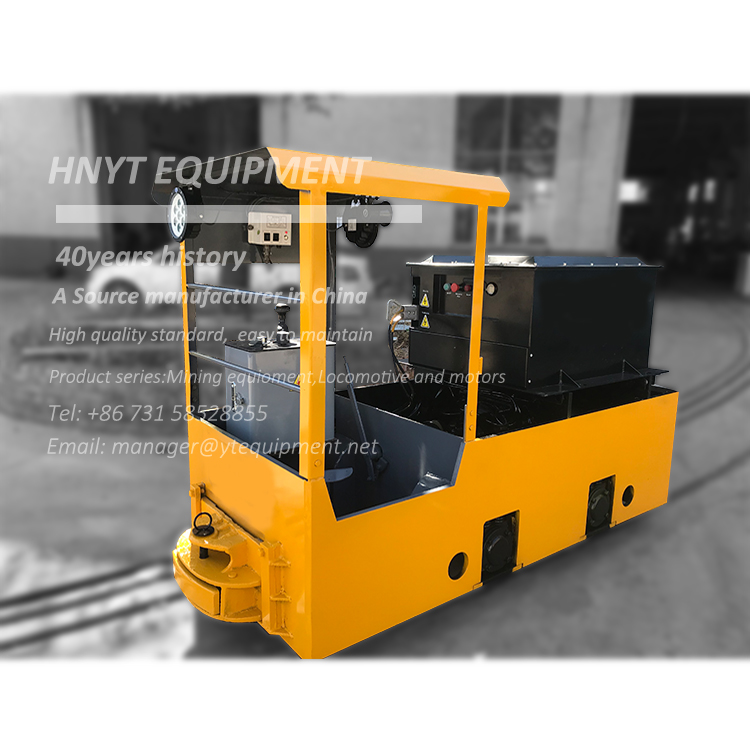
Battery electric locomotives are widely used in mining and industrial. Choosing the right battery type is critical to ensure optimal performance, efficiency, and cost-effectiveness. In this guide, we will compare lithium batteries and lead-acid batteries for battery electric locomotives, highlighting their advantages, disadvantages, and best-use scenarios.
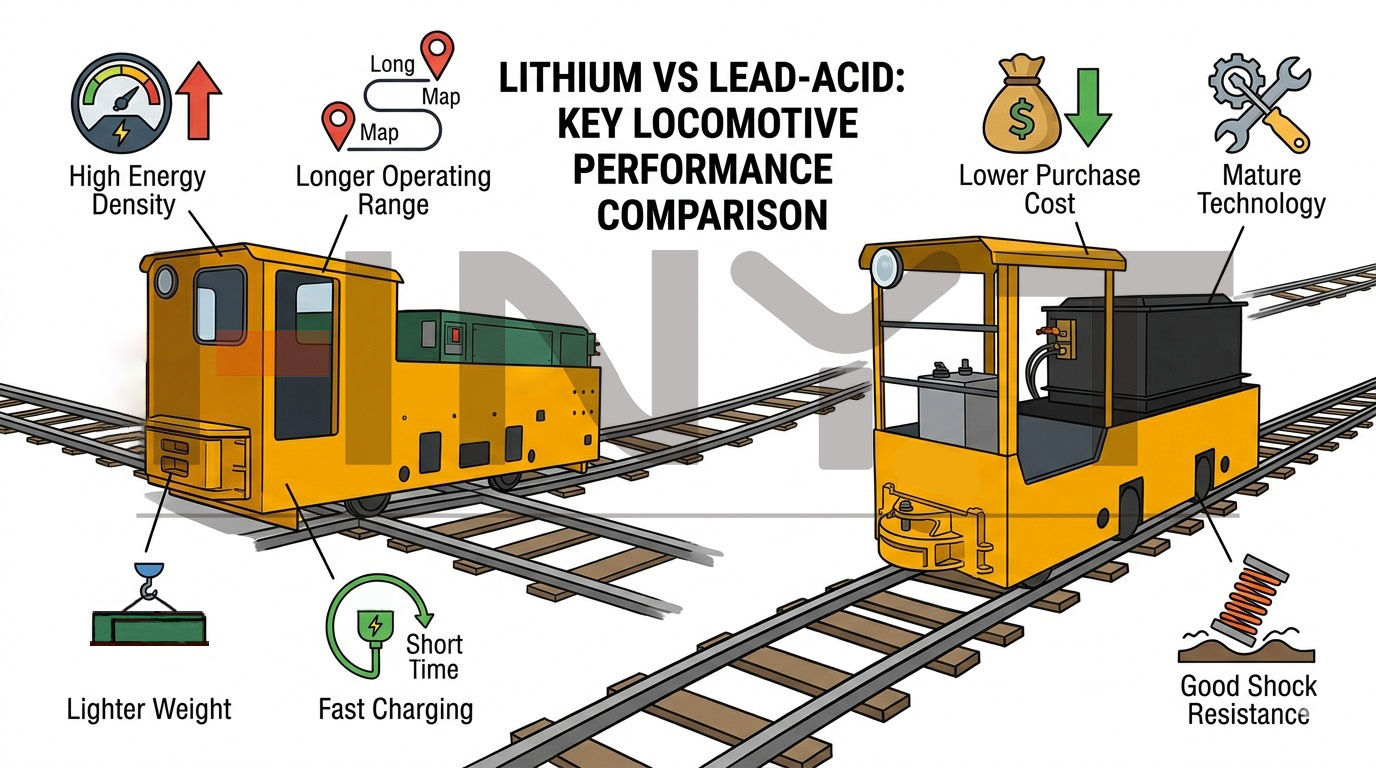
The two most common battery types for battery electric locomotives are lithium batteries and lead-acid batteries. Each type offers unique characteristics and suits different operational needs.
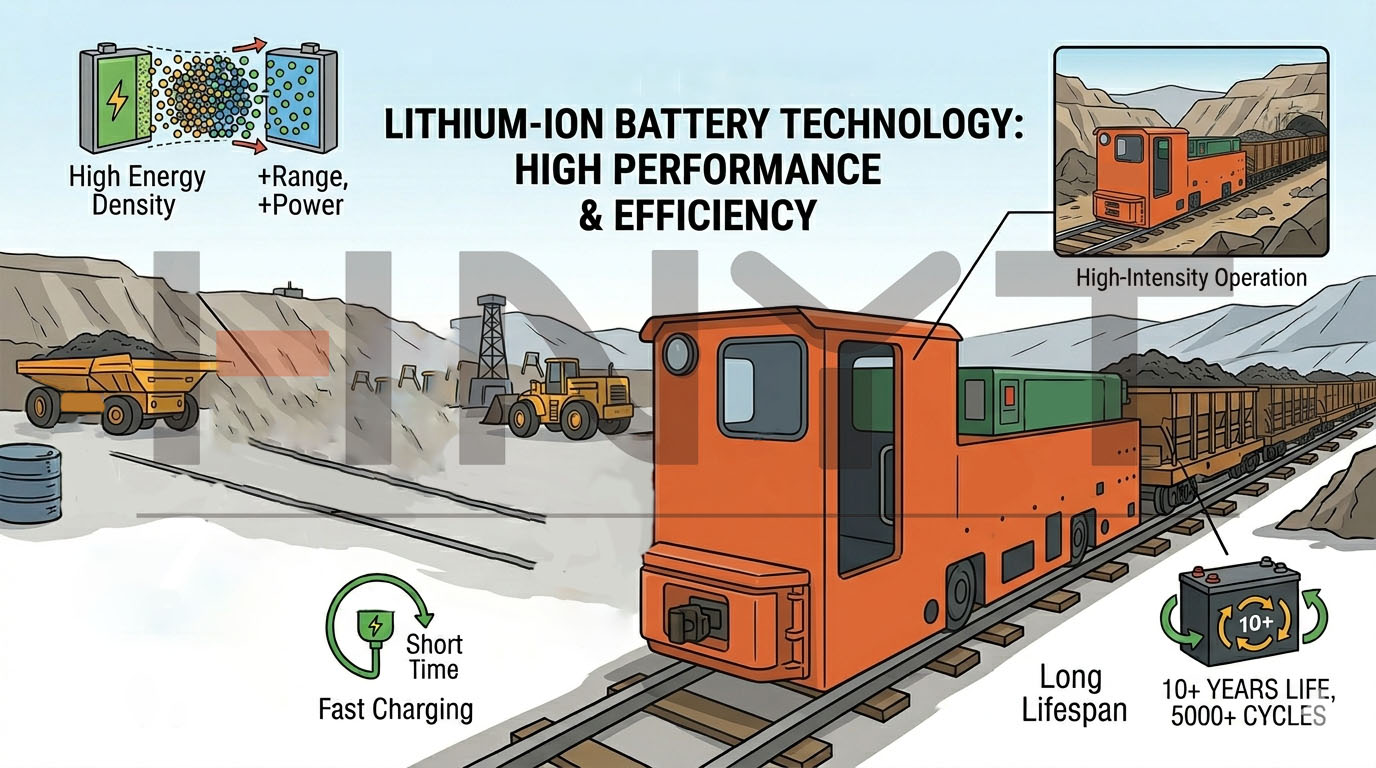
Lithium batteries provide higher energy density than lead-acid batteries. This allows battery electric locomotives to achieve longer operating ranges and higher power output, enhancing locomotive performance.
Compared to lead-acid batteries, lithium batteries are lighter. This reduces the overall weight of the battery electric locomotive, improving transport efficiency and load capacity.
Lithium batteries can endure more charge-discharge cycles, extending the battery life of battery electric locomotives. This reduces replacement frequency and maintenance costs.
Lithium batteries support rapid charging, allowing battery electric locomotives to quickly return to operation and improve overall productivity.
Lithium batteries do not require the addition of electrolytes and do not need frequent maintenance during subsequent use.
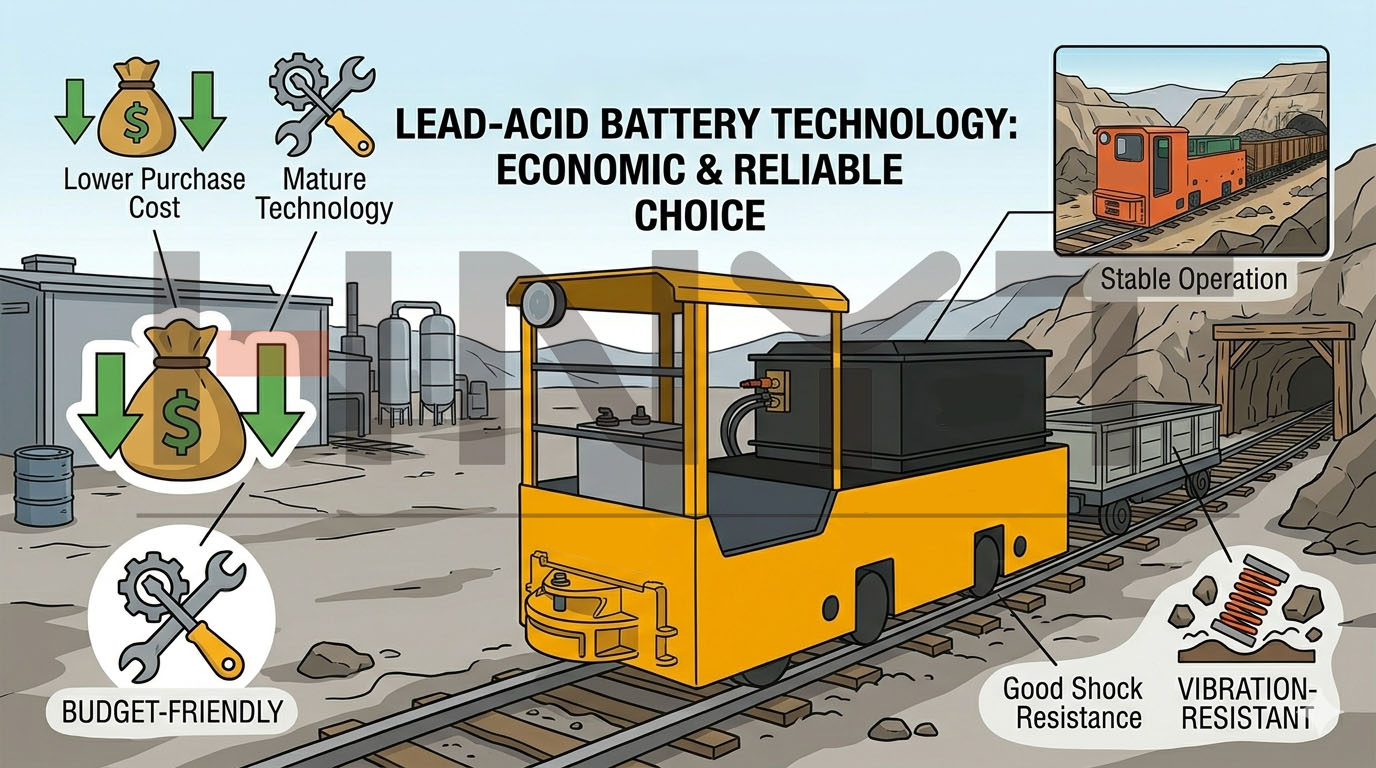
Lead-acid batteries are more economical than lithium batteries, making battery electric locomotives with lead-acid batteries more budget-friendly.
Lead-acid batteries are more resilient to vibration and rough operating conditions, which suits harsh environments.
Lead-acid batteries provide less energy per unit weight, limiting the operating range of battery electric locomotives.
The added weight of lead-acid batteries increases the overall load of the locomotive, affecting efficiency and payload capacity.
Lead-acid batteries require more frequent replacement and maintenance, increasing downtime and operational costs.
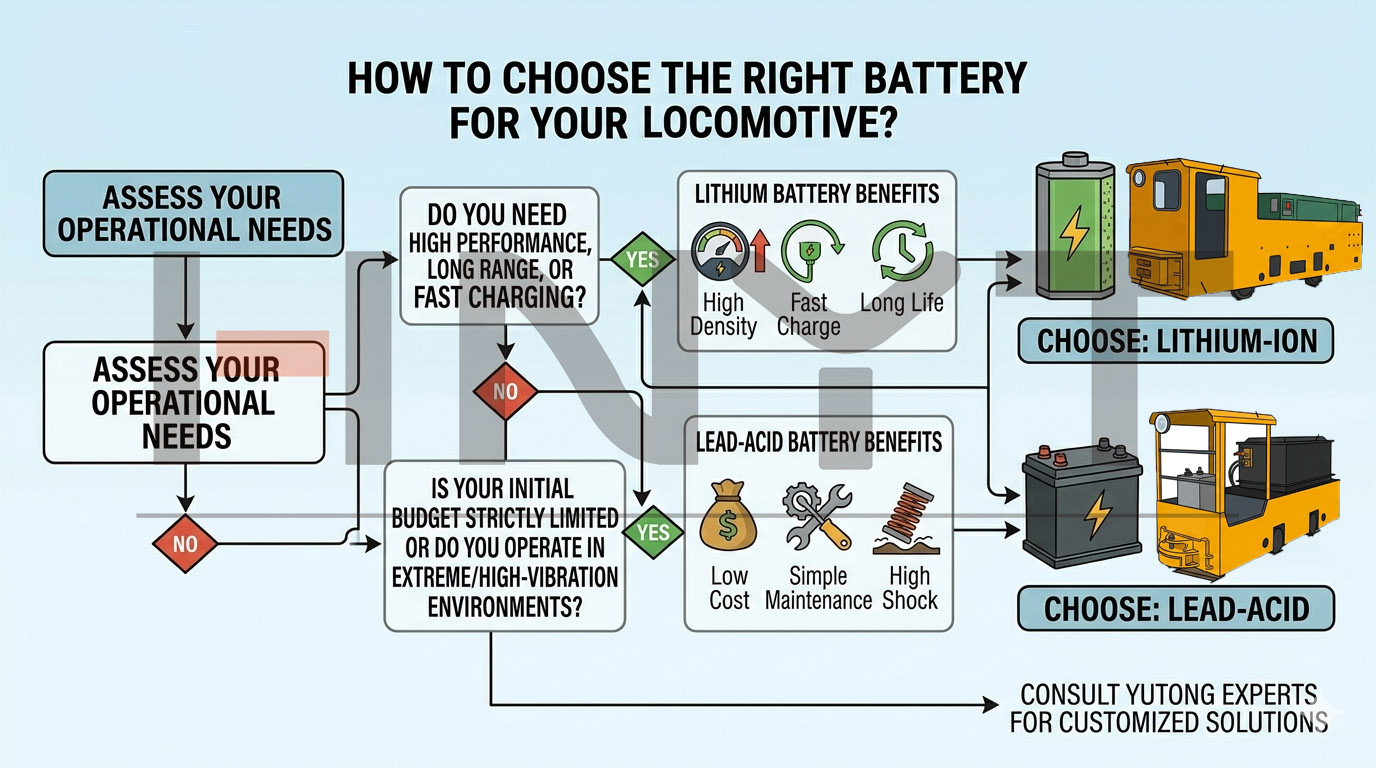
When selecting a battery for your battery electric locomotive, consider the following factors:
Performance Needs: High-performance applications benefit from lithium batteries due to their energy density and fast charging.
Budget Constraints: Lead-acid batteries are more cost-effective for projects with strict budget limits.
Environment: Harsh and vibration-prone environments may favor lead-acid batteries.
Maintenance: Lithium batteries reduce long-term maintenance and replacement frequency, saving operational costs.
Choosing the right battery is crucial for the efficiency and performance of battery electric locomotives. Lithium batteries offer high energy density, lightweight design, long lifespan, and fast charging—ideal for high-performance scenarios. Lead-acid batteries provide low cost, mature technology, and strong shock resistance—suitable for cost-sensitive and stable operations. By carefully evaluating your operational needs, budget, and environment, you can select the best battery type to ensure your battery electric locomotive delivers maximum performance and value.