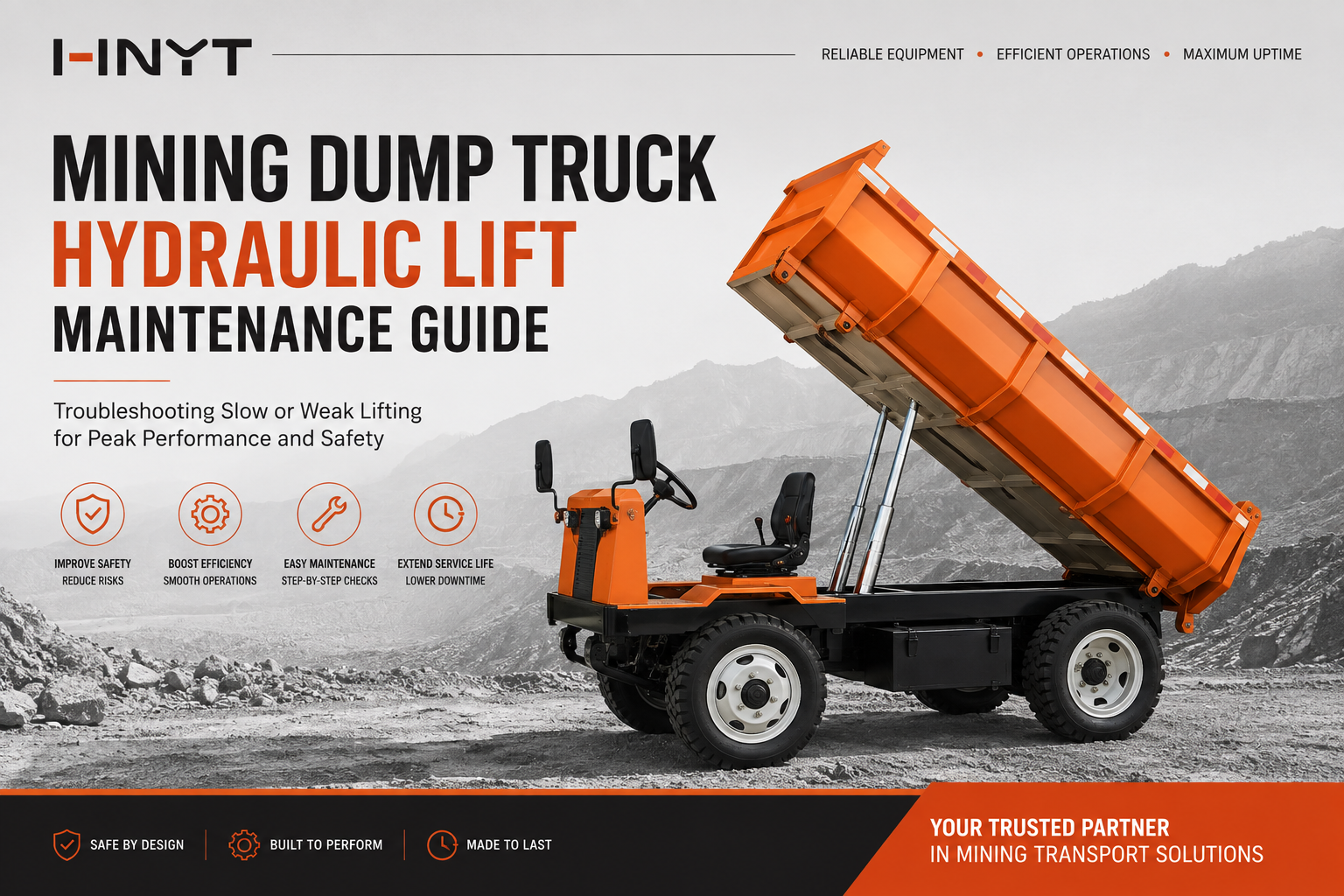
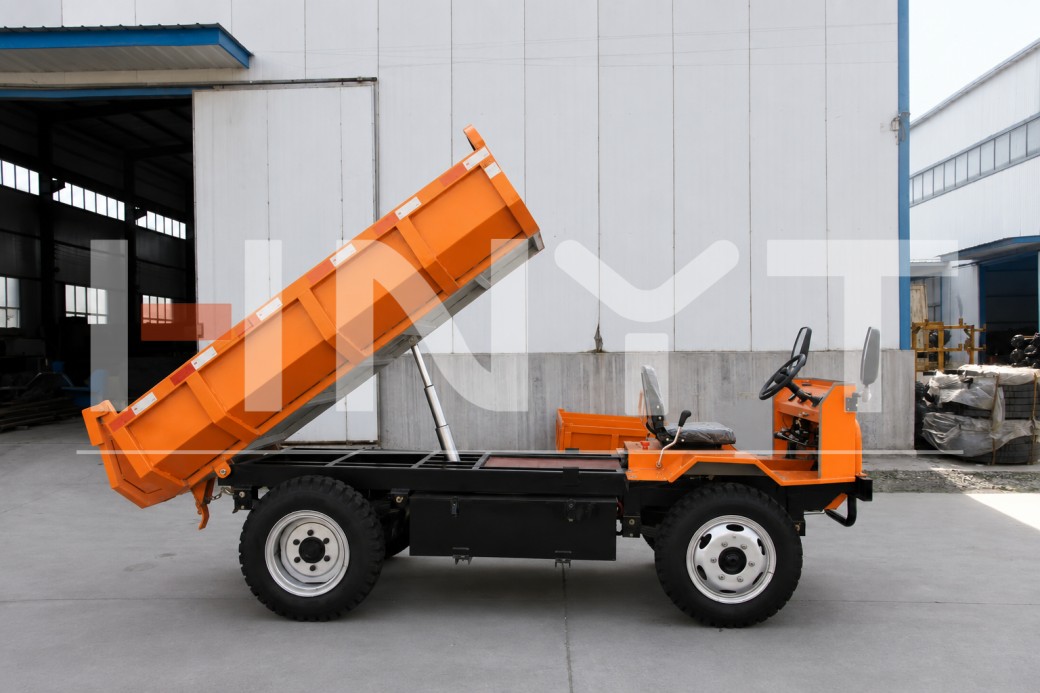
A mining dump truck works in repeated loading and dumping cycles. When the cargo rises slowly, shakes during lifting, or cannot reach the normal angle, haulage efficiency and job-site safety are affected. A weak hydraulic lift can also stress the cylinder, frame hinge, hydraulic pump, and control valve.
This guide focuses on one common issue: a mining dump truck hydraulic tipping system that lifts slowly or feels weak under load. The same checks apply to underground mining dump trucks, narrow-body mining trucks, and four-wheel drive mine transport vehicles.
The mining dump truck cargo rises, but the lifting speed is much slower than normal. Low oil, thick oil, contaminated oil, or air in the hydraulic system is often involved.
The mining dump truck can lift an empty body but struggles with ore, coal, slag, or wet material. Overload, low pump pressure, relief valve leakage, or internal pump wear may be the cause.
If the raised body slowly sinks, check the mining dump truck cylinder seals. Internal leakage may exist even when no oil is visible on the ground.
Insufficient hydraulic oil reduces pressure and makes the pump draw air. Dirty oil can carry particles into the control valve, causing spool sticking, poor sealing, and unstable lifting.
A worn gear pump may lose pressure through excessive internal clearance. If pump noise increases and lifting force drops, pressure testing is necessary.
A stuck control valve can block oil flow. A relief valve that opens too early can return high-pressure oil to the tank before the cylinder develops enough lifting force.
Scratches on the piston rod, damaged seals, or loose fittings can reduce lifting power. Oil marks around the rod or cylinder base should be checked before the next loaded cycle.
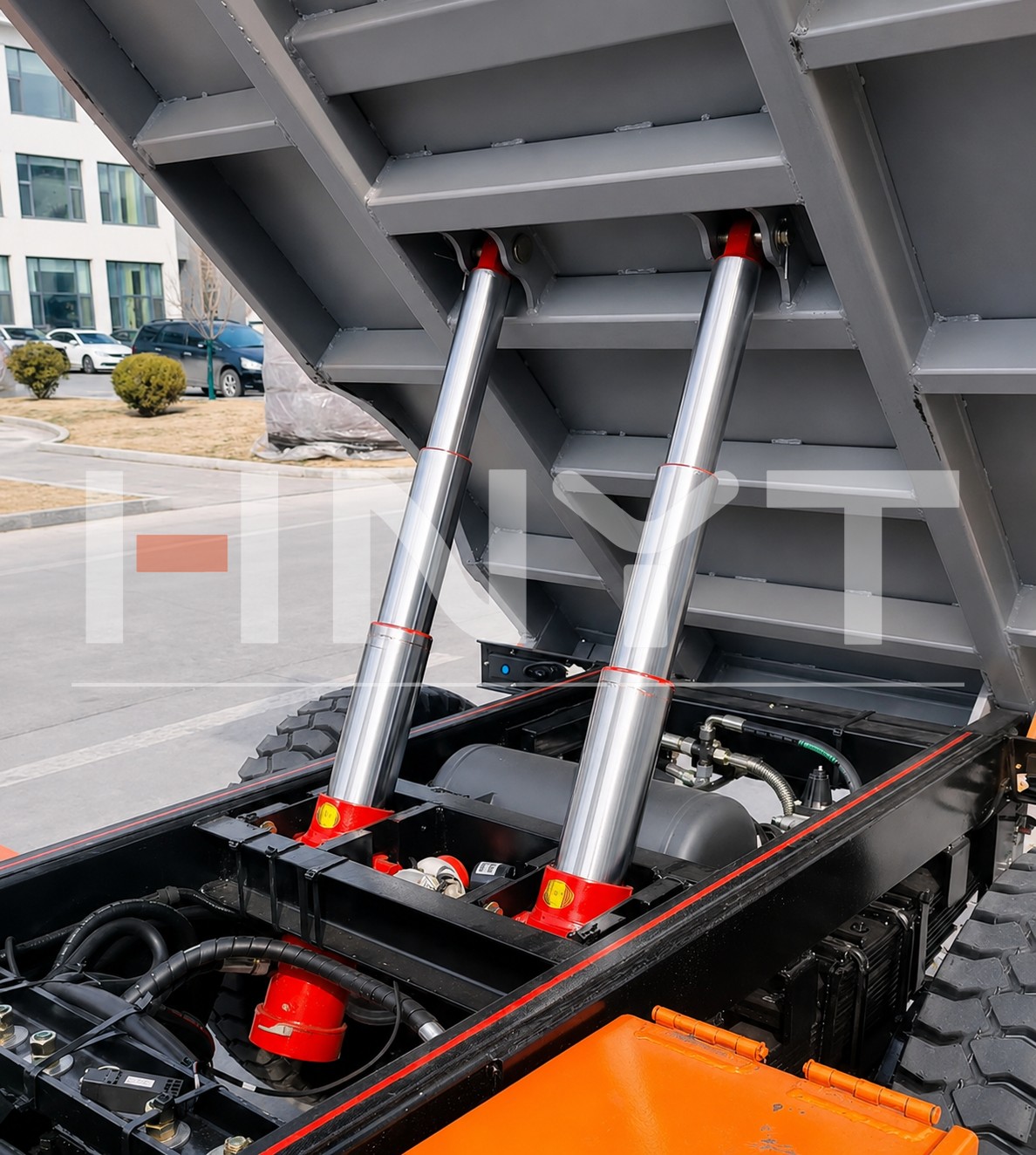
Park on level ground, empty the cargo when possible, apply the parking brake, and support the raised body with a proper safety prop. Never work under an unsupported cargo.
Confirm that the oil level is within the marked range. Replace oil that looks milky, dark, foamy, or mixed with dirt. Use the recommended hydraulic oil grade for the site temperature.
Look for cracked hoses, loose fittings, wet joints, damaged seals, and scored rods. Clean the rod surface before lowering the body so dirt is not pulled into the seal area.
If oil level and hoses are normal but the lift is still weak, test hydraulic pump pressure. Let a qualified mechanic check the relief valve, control valve, and internal leakage.
After maintenance, cycle the cargo several times without load. Movement should be smooth, pump sound should be stable, and the body should hold position without sinking.
Keep hydraulic oil clean, change filters on schedule, and prevent dust or water from entering the tank. Warm up the mining dump truck before heavy lifting in cold weather.
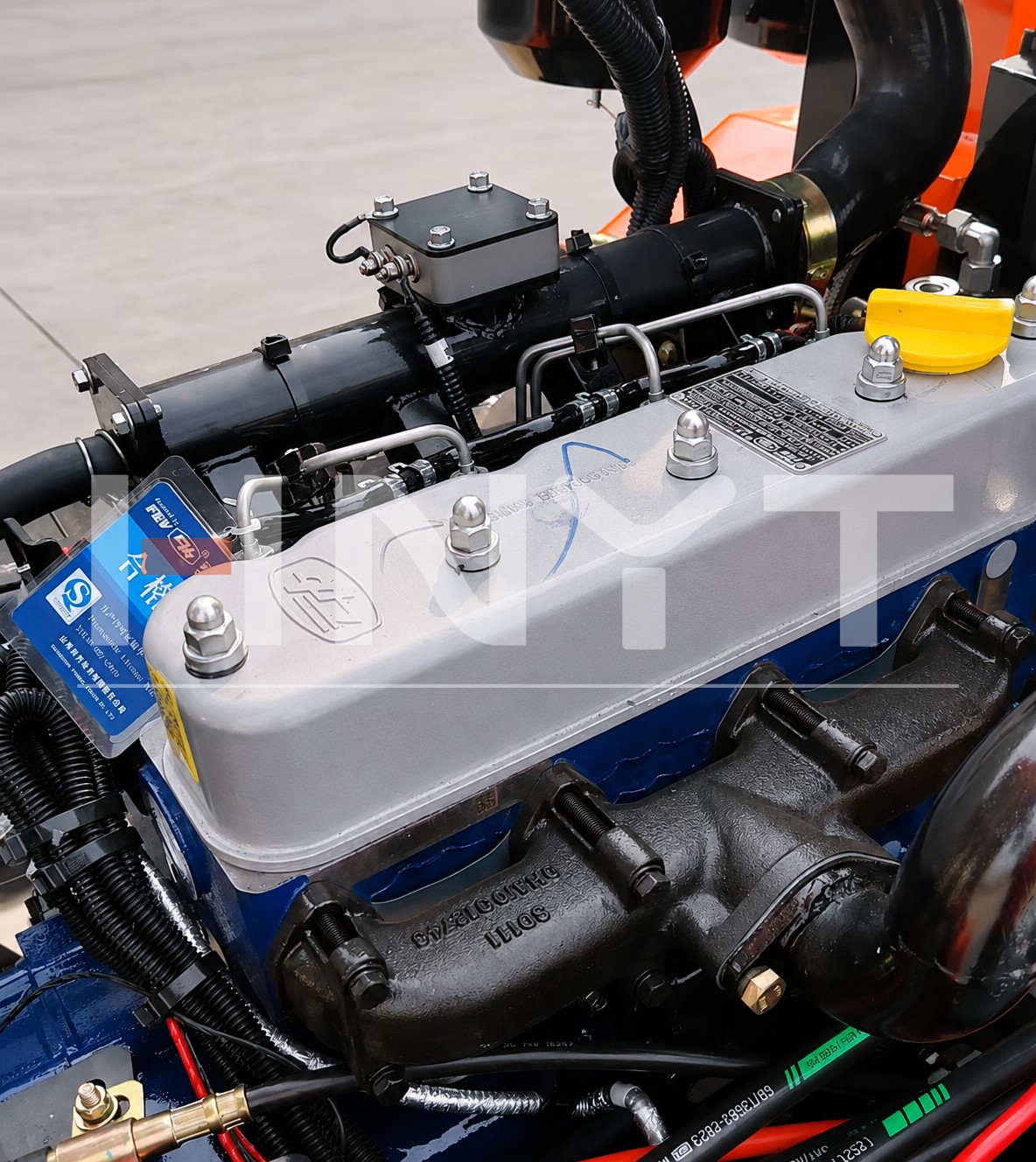
Avoid overloading and do not raise the cargo on a steep or unstable surface. Grease hinge pins, inspect the subframe, and check engine speed or power take-off condition if pump response changes suddenly.
Stop the mining dump truck if the body cannot lift a normal load, sinks after lifting, the pump makes abnormal noise, oil temperature rises quickly, a hose bulges, or hydraulic oil leaks near the cylinder. Continued dumping can damage the pump, valve, cylinder, or frame.
A slow hydraulic lift is easier to solve when handled early. Clean oil, tight hoses, correct valve pressure, healthy cylinder seals, and smooth pump output help a mining dump truck keep safe, efficient dumping performance.
←How to Fix Fast Battery Drain in a Battery Mine Locomotive?
No Information→