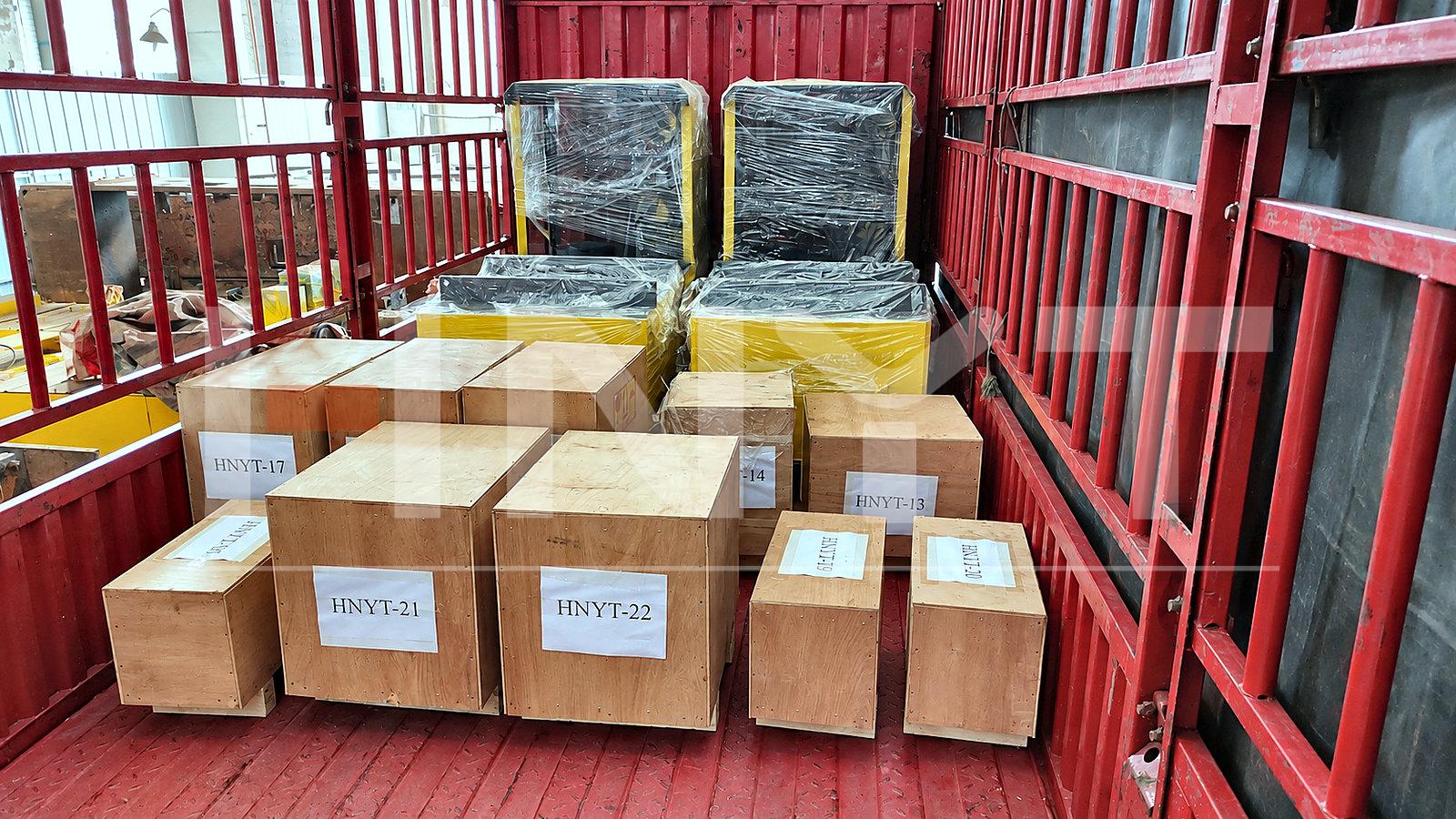
On November 5, 2026, HNYT finished loading an order of 2.5 ton lithium battery locomotives into two shipping containers for a mining customer in South America. Packed with them are spare traction motors, gears, drive shafts and brake parts in numbered crates, plus steel plates the customer ordered together with the locomotives. In the mine, the locomotives will haul ore and waste rock on the underground track, and one booking brings everything to site at the same time.
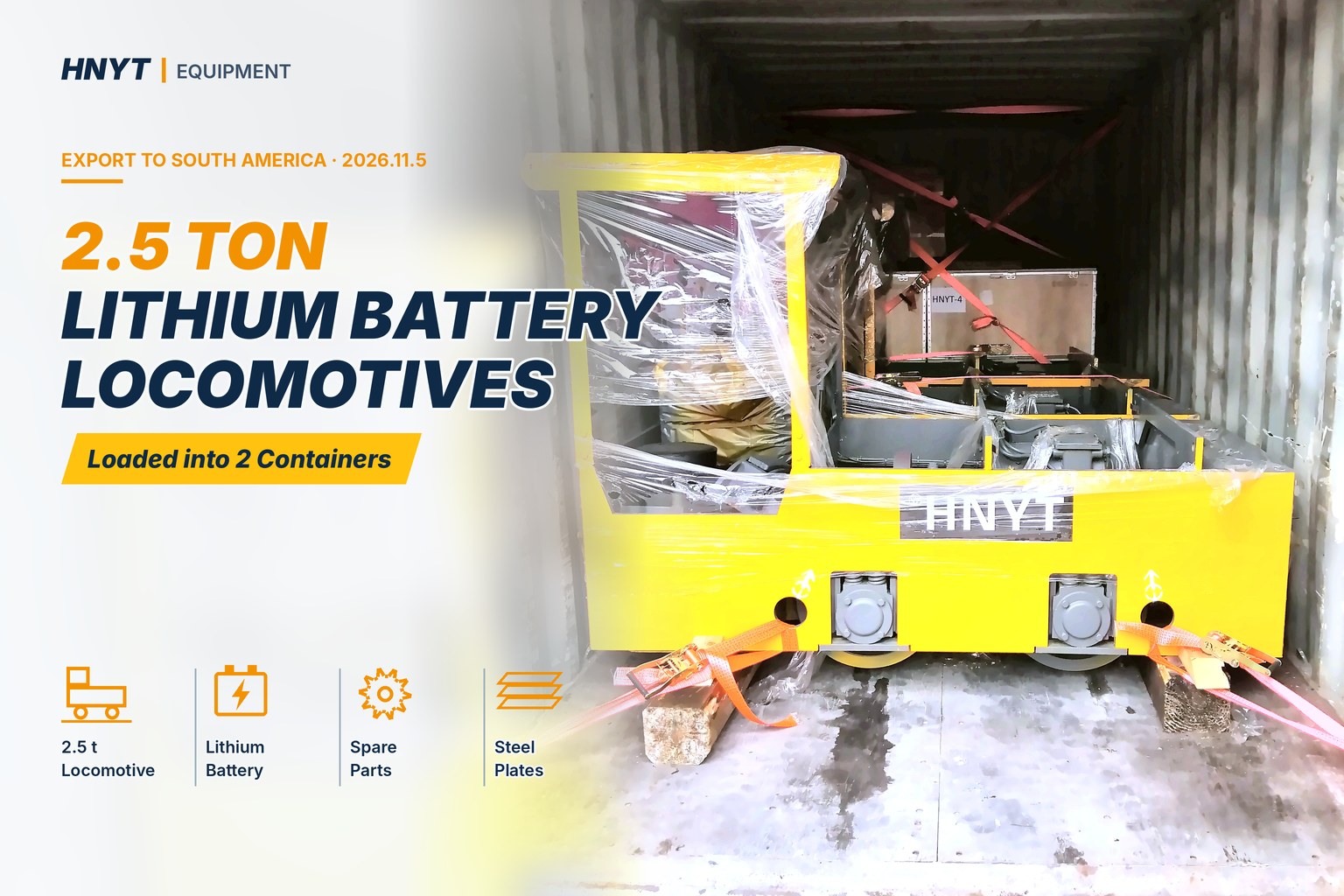
Before leaving the workshop, every locomotive was checked and wrapped in stretch film over the cab, the controls and the battery compartment, to keep out dust and salty, humid air on the long voyage. The KA plate on the body is the safety mark for equipment used in non-coal mines.
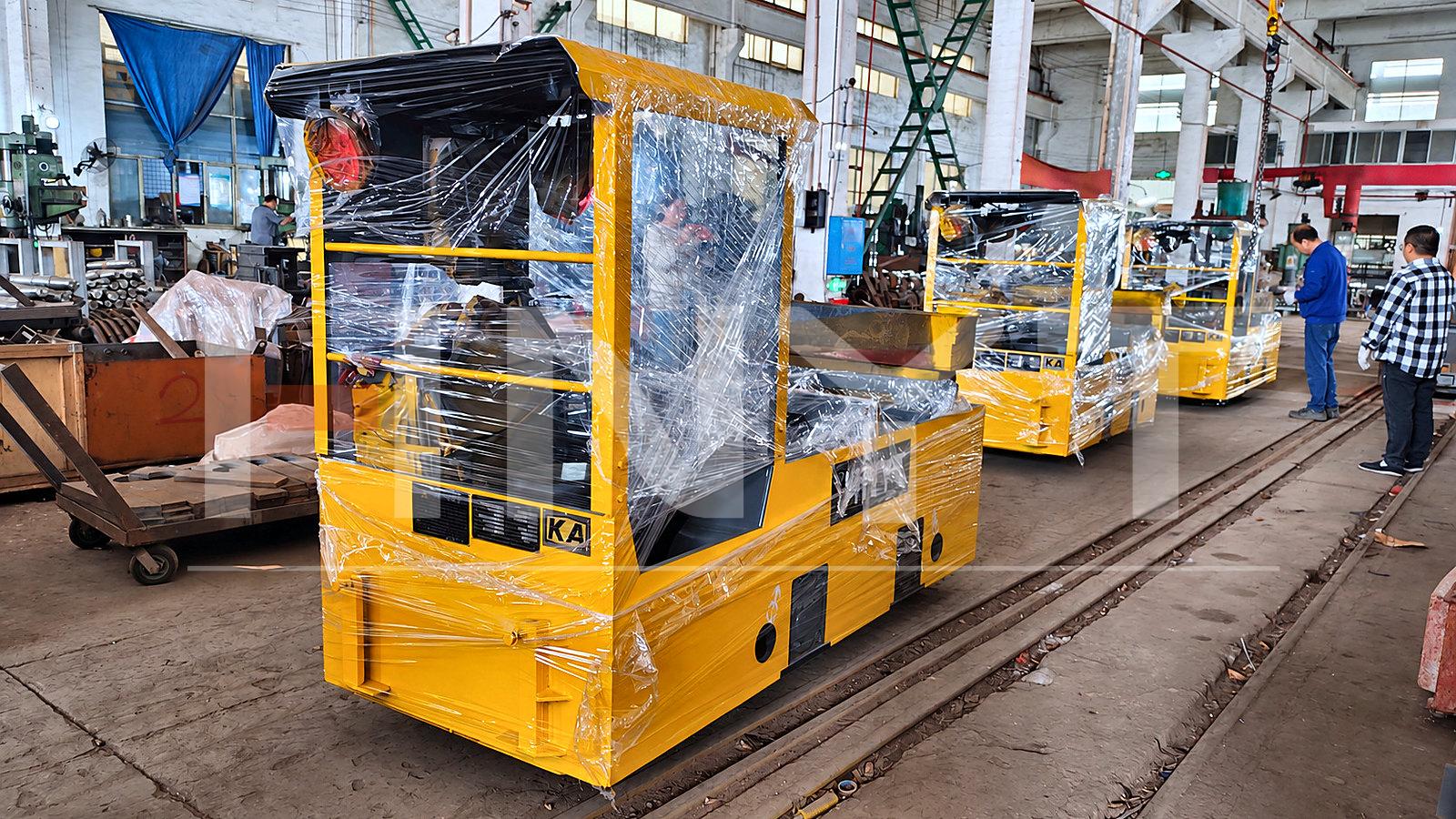
Spare traction motors and wear parts were prepared at the same time, so the mine has replacements on hand from the first day.
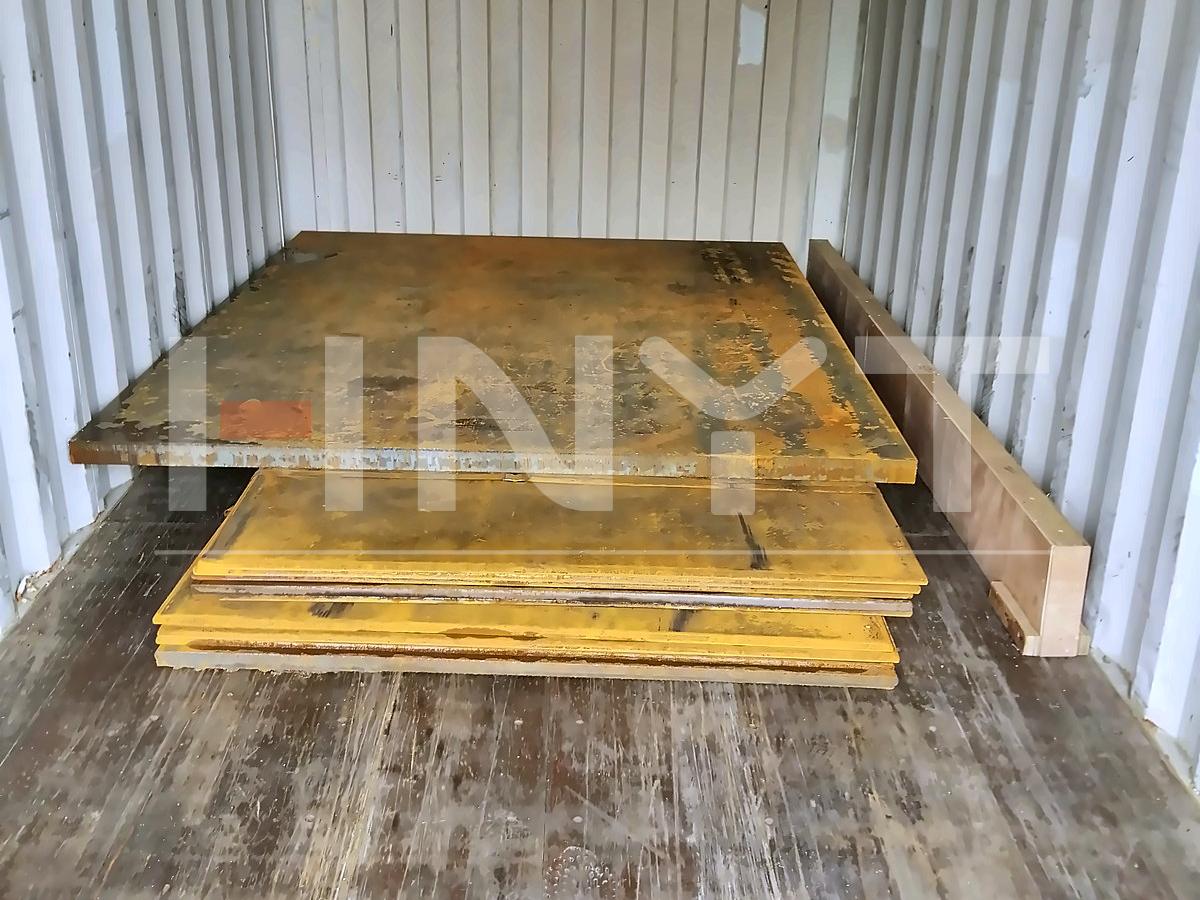
In the second container, the steel plates were laid flat on the floor, with a timber beam along the side wall to keep them off the corrugated panels. Lying flat, they spread their weight and keep the centre of gravity low. Crated parts were stacked over and beside the plates on timber dunnage, and the door end was closed off with crossed straps.
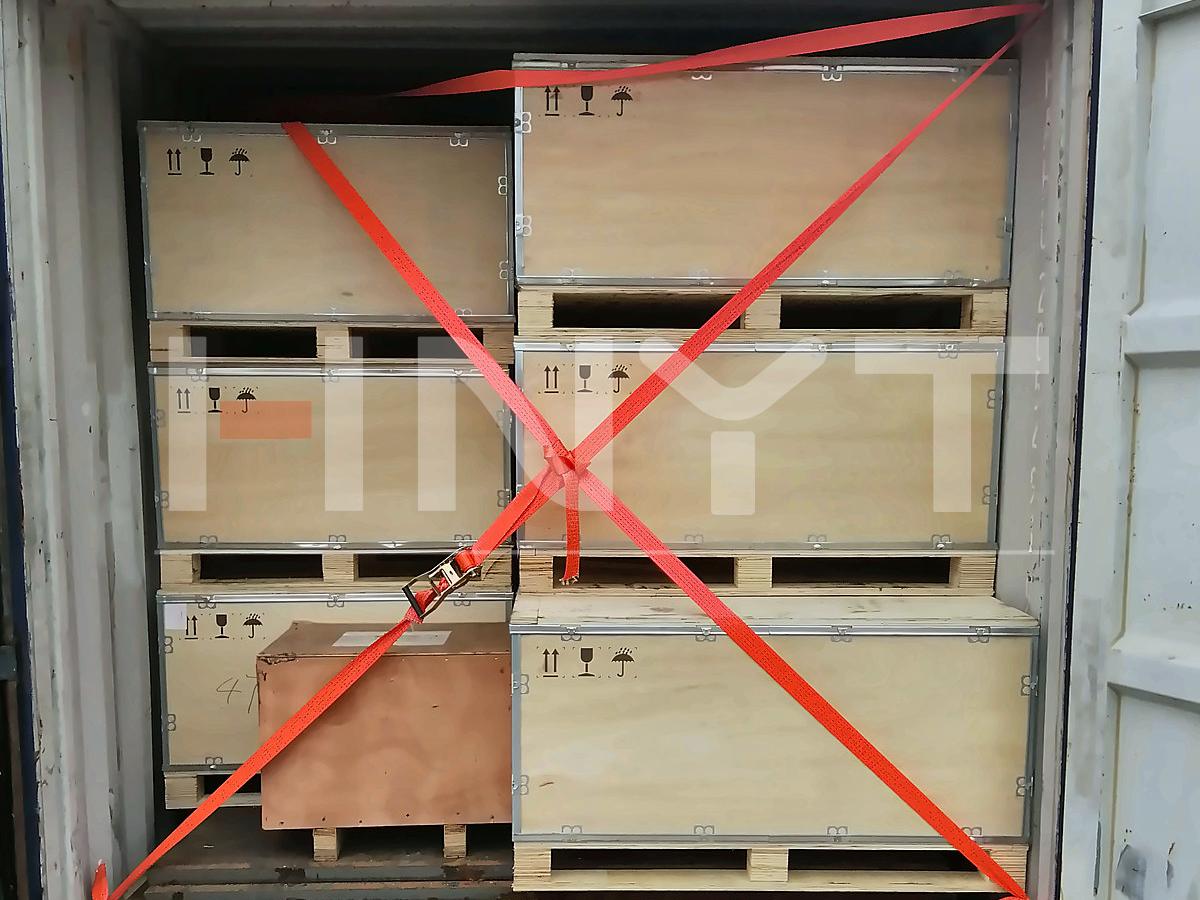
The heavier crates went in first against the front wall, stacked two high on their pallets and held back with crossed ratchet straps. The locomotive was loaded last, close to the door, so it is the first item out on site. It rests on timber blocks under the frame, and ratchet straps run from the lifting points at both ends of the frame to the container's lashing rings.
Lithium-ion batteries are Class 9 dangerous goods in sea freight, so the battery packs were packed in separate crates and the container carries the UN 3480 lithium battery placard. On site, the packs go back into the battery compartment before commissioning.
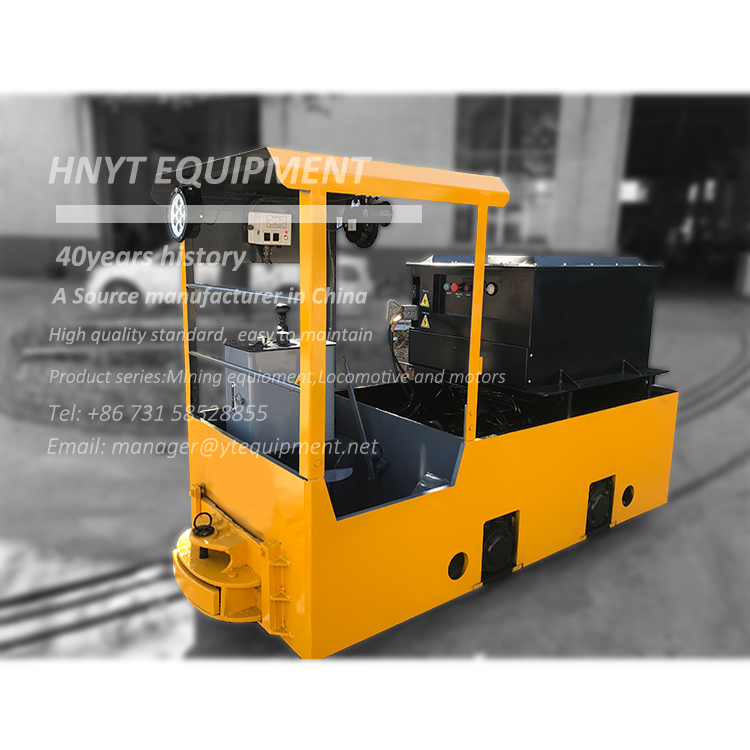
The "2.5 ton" is the adhesive weight: the weight pressing the wheels onto the rail, which is what produces traction. Five points matter when you select one:
• Hauling capacity. On a 3‰ gradient it pulls about 20–25 t, counting the mine cars, the ore and the locomotive itself. Steeper track lowers this figure, so a heavy-duty version is available for gradients above 3‰.
• Speed control. Resistance control is simple and robust. IGBT chopper control starts the train smoothly, reduces wheel slip and wastes less battery energy as heat.
• Track gauge. 600, 762 or 900 mm as standard; other gauges are built to order.
• Lithium or lead-acid. Lithium packs need no electrolyte top-up, charge faster and last more cycles, so the locomotive spends less time in the charging bay.
• Working conditions. Altitude up to 1,200 m, ambient −20 °C to +40 °C, in mines free of methane and other explosive gas. Gassy mines need an explosion-proof locomotive.
• 2.5 ton lithium mine battery locomotive – specifications
• Lithium battery locomotives – all models
• 2.5 ton lithium locomotives built for a gold mine park
• Compact 2.5 ton battery mine locomotives ship to South America
Send us your track gauge, gradient, haul distance, number of curves, load per trip and shift hours, plus any spare parts or materials for the same shipment. We will confirm the configuration, plan the container loading and reply with a quotation and the full specification sheet.