In October 2026, HNYT completed the final check, crane loading and transport securing of one 2 ton mining diesel tricycle ordered by an overseas customer. Powered by an 18 hp Changfa diesel engine, the unit will haul ore, waste rock and materials over short distances on mine roads, where a compact, self-powered vehicle is easier to run than a full-size dump truck.
Item | Shipment information |
Product | 2 ton mining diesel tricycle |
Quantity | 1 unit |
Rated payload | 2 t (on level road) |
Engine | Changfa 18 hp diesel |
Starting | Electric start with hand-crank backup |
Steering | Power steering |
Tyres | Front 500-14 / rear 650-16 |
Suspension | Weighted double shock absorption; widened, thickened leaf springs |
Cargo box (L×W×H) | 1.8 × 1.25 × 0.45 m; 5 mm steel bottom and sides |
Overall size | 3.4 × 1.1 × 1.25 m |
Destination | Overseas customer (country not disclosed) |
Dispatch | October 2026, by flatbed truck from the HNYT workshop |
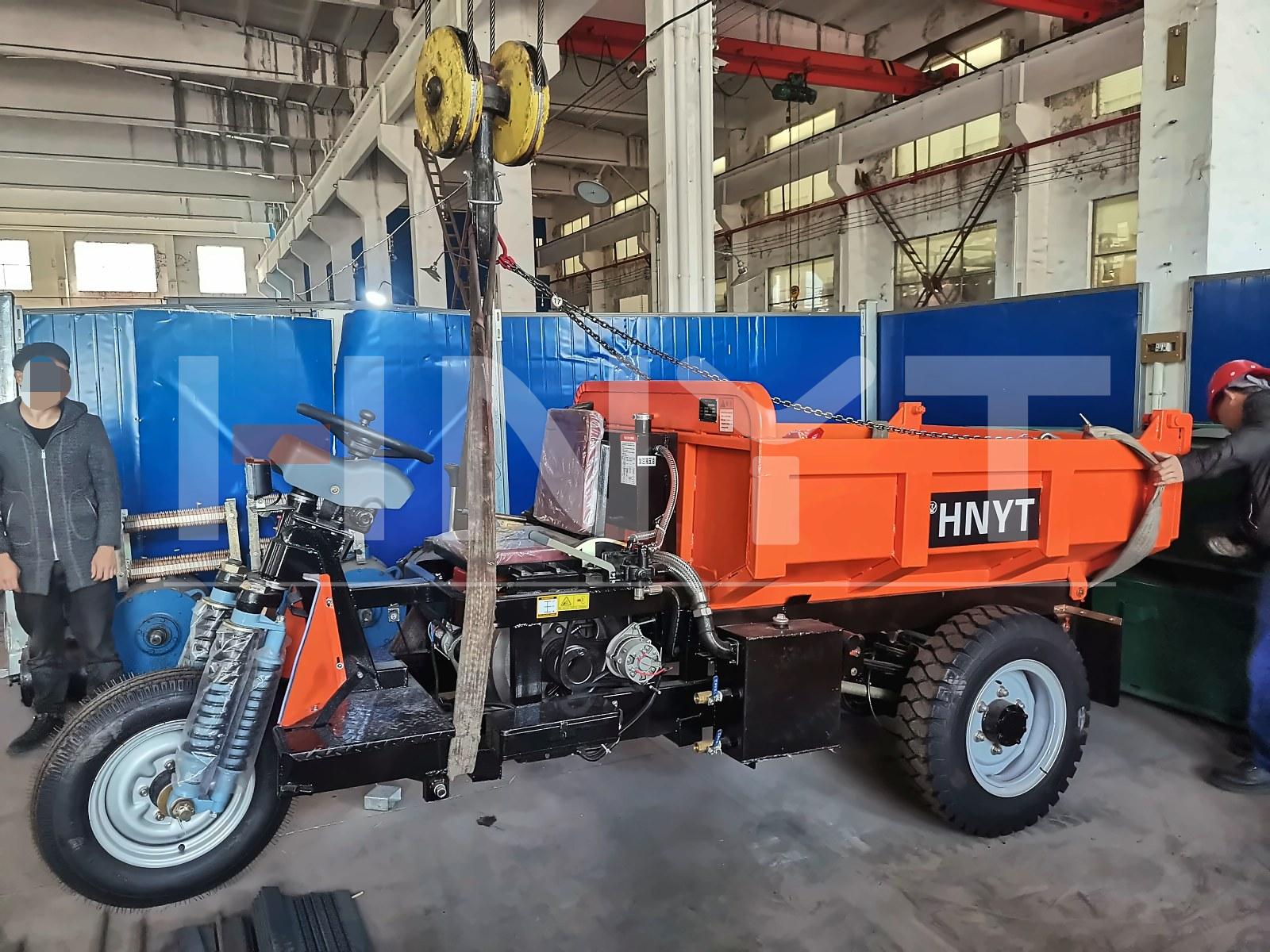
Loading was carried out with the workshop's overhead crane. A wide lifting sling was passed under the chassis and a chain was hooked to the cargo box, so the tricycle hung level and its weight was carried by the frame rather than by the body panels. Workers guided the vehicle by hand as it left the floor, keeping the front fork and steering column clear of the lifting gear.
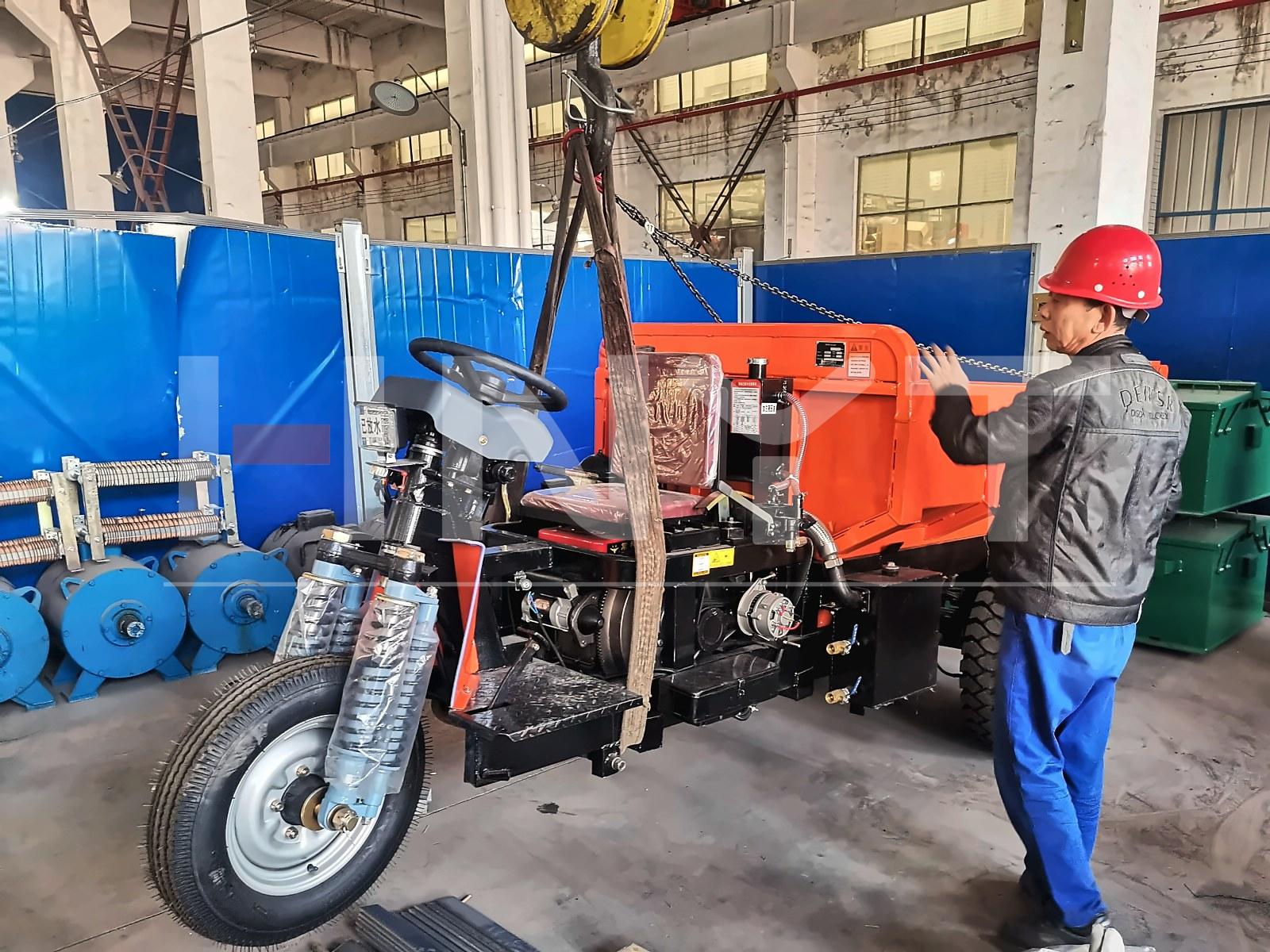
Before lifting, the front shock absorbers and the driver's seat were wrapped in protective film. These are the parts most easily scratched or soiled during handling and long-distance transport.
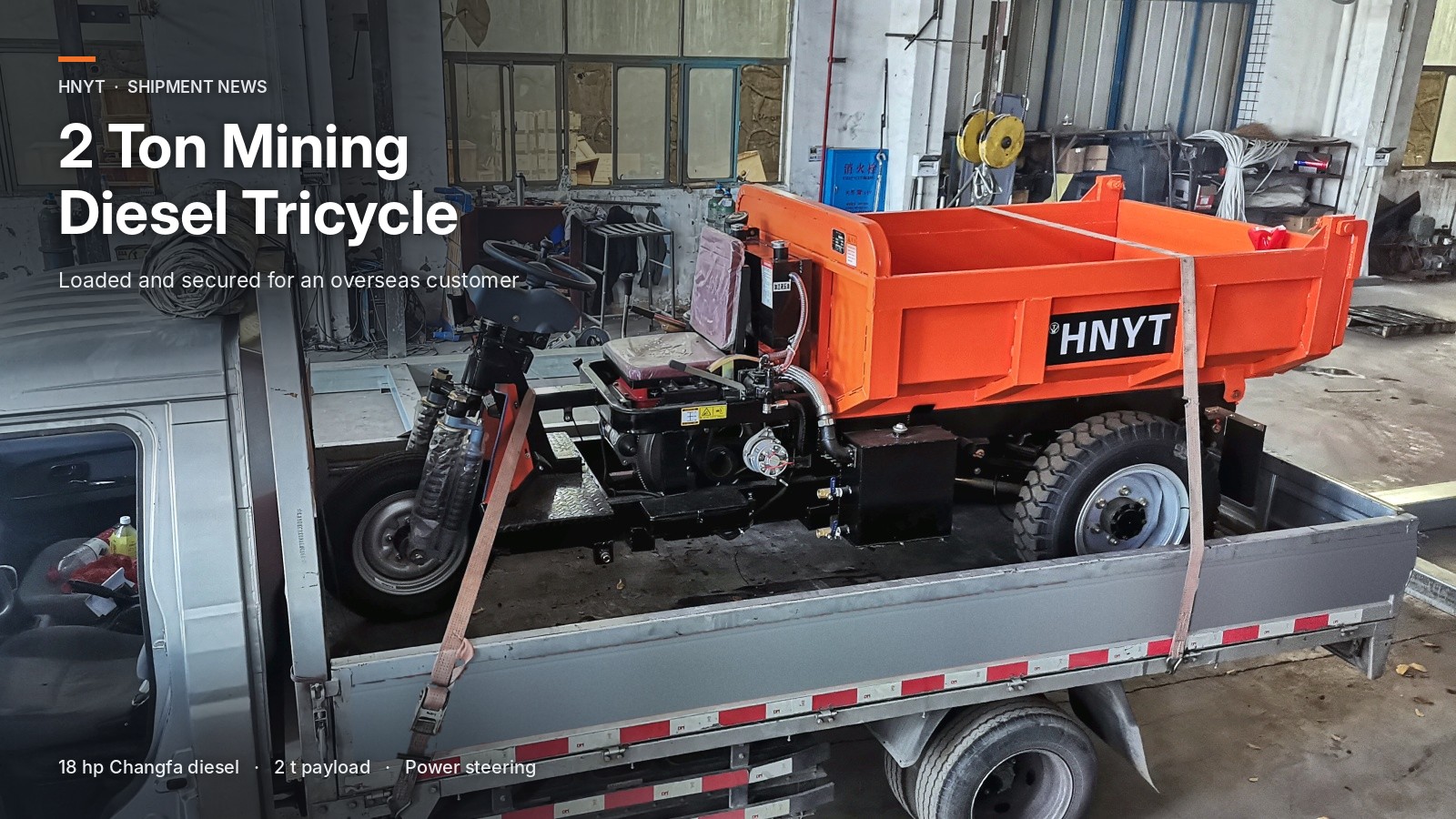
The tricycle was then lowered onto the bed of a flatbed truck, with the front wheel toward the cab and the rear mining-pattern tyres set squarely on the deck. It was tied down with two ratchet straps: one over the cargo box to hold the rear axle down, and one at the front frame to stop the vehicle shifting under braking. The crane was released only after both straps were tensioned and the vehicle was stable.
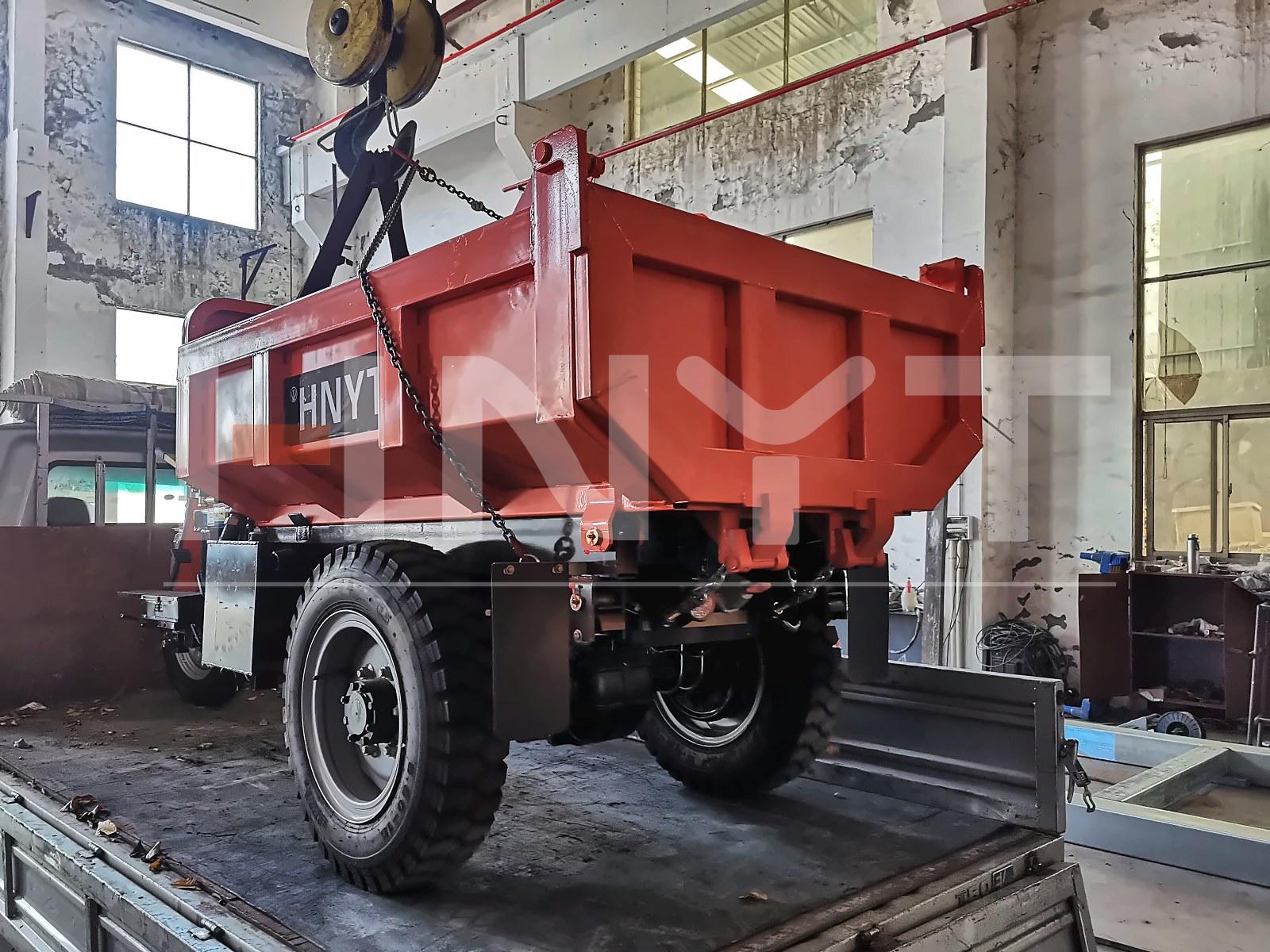
As with every tricycle that leaves our workshop, the unit went through a pre-delivery check of engine start-up, steering, brakes and body fasteners before it was loaded.
• Right-sized payload. Two tonnes per trip suits small and medium mines, quarries and tunnel sites where material is loaded by small loaders or by hand and haul roads are narrow.
• No charging infrastructure needed. The diesel engine runs wherever fuel is available, which matters at remote sites with limited or unstable power. Electric start with a hand-crank backup keeps it working even when the battery is weak.
• Made for rough roads. Power steering reduces driver effort on uneven ground, while 650-16 rear tyres, weighted double shock absorption and widened leaf springs carry the load over gravel and potholes.
• A body that takes impact. The cargo box uses 5 mm steel plate on the bottom and sides to withstand rock dropped in during loading.
• Simple to ship. With overall dimensions of 3.4 × 1.1 × 1.25 m, the tricycle is easy to move by truck and to load into a shipping container.
For underground headings where ventilation is limited or diesel exhaust is restricted, we usually recommend a mining electric tricycle instead. For heavier loads, the 3 ton and 4 ton diesel models keep the same layout with more powerful engines and larger tyres.
• 2 ton mining diesel tricycle – full specifications
• 3 ton mining diesel tricycle for underground tunnels
• High-efficiency 4 ton mining diesel tricycle
• Advantages of HNYT mine tricycles
Planning a similar order? Send us the quantity you need and a short description of your working conditions: haul distance, road gradient, road surface, daily tonnage and whether the vehicle will work on the surface or underground. Our engineers will confirm the right model and configuration and reply with a quotation and the full specification sheet.